
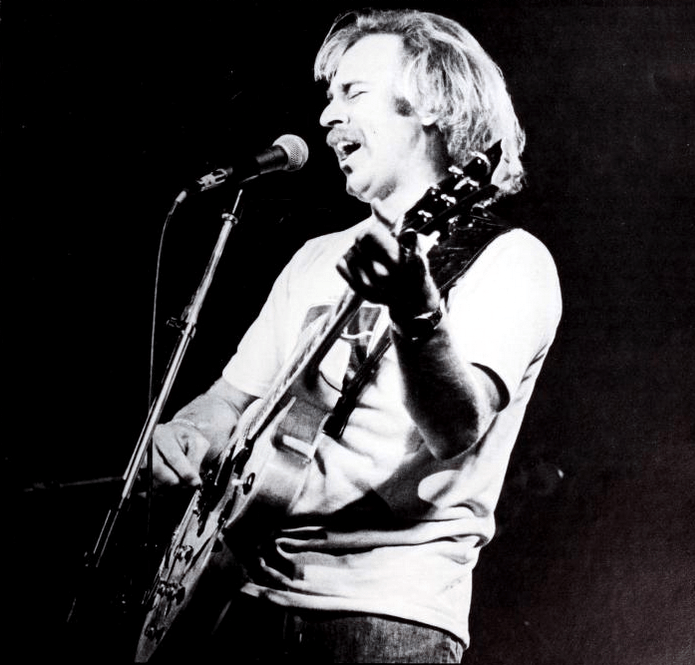
Many rock stars have by now passed into eternity, this time, Jimmy Buffett. Like for many of “My Generation” contemporaries, Jimmy Buffett’s passing has been a little harder than others. Jimmy Buffett really seemed like a kind of older brother (a bit wilder than my actual older brother) or street-wise uncle figure for us. He seemed to be really accessible, though few of us ever personally met him. He was a rock star after all. I probably grew up with his music at its peak, while I was in college, when in the mid-1980s the music industry was exploding and imploding at the same time, and so many fads came and went. A little like the Grateful Dead, Jimmy Buffett and the Coral Reefer Band had a sort of niche following (I don’t like the term “cult following” but you know what I mean) rather than a general appeal, but still, somehow, generally people seemed to connect with him. He was like a bard from Medieval Europe who would go around from town to town, singing the same story-oriented-morality-tale songs about love (“Come Monday”), happiness (“Changes in Latitudes, Changes in Attitudes”) danger (“Fins”), and perhaps even the afterlife (“One Particular Harbor”).
Perhaps the team of the Pillar puts it better than me:
Jimmy Buffett understood that we’re made for something more. He understood a human longing for, well, eternal beatitude. He wouldn’t have put it that way — though “Changes in Latitude, Changes in Attitude” comes kind of close. But Buffett spun a world for his listeners — this idyllic place called Margaritaville, populated by pirates and surfer chicks and a kind of epicurean or Elysian happiness. He wasn’t selling the beatific vision, don’t get me wrong. But Buffett understood that everyone is looking for some transcendence. He understood that there is something punitive about eating bread “by the sweat of the brow,” as the Lord put it in Genesis 3.
But it’s Buffett’s most famous song, “Margaritaville” that most interests me, not because of the music, but the lyrics. The three choruses reveal that the narrator is pondering his recent failed romance, and his friends are telling him that his former girlfriend is at fault. The last line of each shows his shifting attitude toward the situation: first “it’s nobody’s fault,” then “hell, it could be my fault…” and finally “it’s my own damn fault!” So perhaps the overall story the song tells is not hedonist enjoyment of life in the sun, but rather almost the opposite; it’s a man’s gradual recognition, while drowning his sorrows in alcohol, that it was his foolish actions that destroyed the chance of happiness with the woman he loved. The appeal of the song is thus partly the clever way this evolving story is related in just a few words at the end of each chorus.
Is “Margaritaville” a repentance song? Sometimes perhaps we are prophets, and don’t realize it. Jimmy Buffett commented in an interview about “Margaritaville”: “It’s been a pretty good song. It was written in five minutes about a hot day in Austin, Texas with a margarita and a beautiful woman. I finished it in Key West. I had no idea.” Well, thanks Jimmy, as most of us don’t know where our ideas or talents may land us, may yours land you in heaven. For a really rough version of “Margaritaville” click below. God bless!
 Let's Repent!
I’ve never heard Jimmy talked about the Lord Jesus Christ. I could be wrong.
Me neither. He was raised Catholic, but checked out. It is his paradisaical references I find interesting. Thanks for your comment!